What Is New Music? The New Score Field Guide
New Music Defined
New music is contemporary and experimental composed music written and premiered in the present, and its genres are the 5 broad families into which that living body of work divides: the extended post-war avant-garde, the minimalist and spectral strands, the electroacoustic and computer-music lineage, the jazz- and rock-adjacent experimental scene, and the regional and community scene that stages it.
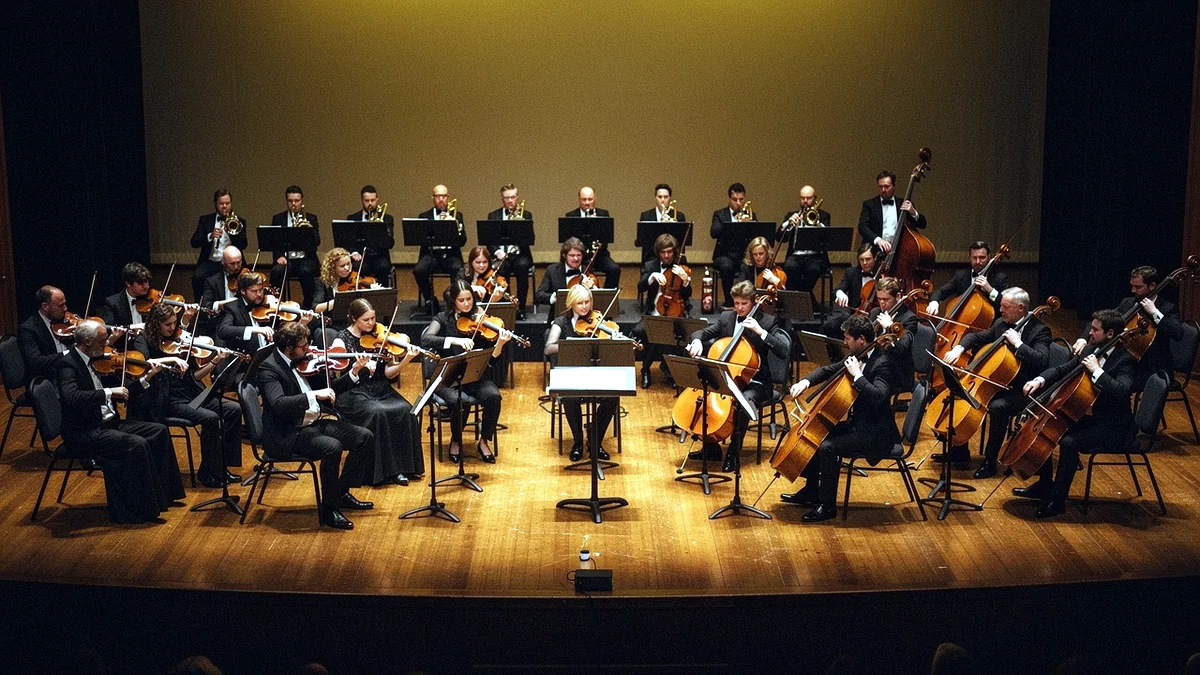
The name is doing two jobs at once. It marks music that is new in the sense of newly written and still being tested, and it marks a field, the one this site is built to explain, which is the practice of contemporary and experimental composed music as it is performed and supported in a regional context. That is what this page defines, and it is the definition the rest of the site leans on.
A new score is a composition that has not yet been established in the standard repertoire. The boundary is not a date but a state. A work counts as new music while it is being heard for the first or the second time, while its instrumentation is still being argued over, while a commission is still being paid. The same piece can be new music in one year and classical in the next, because the field absorbs its own graduates. What does not move is the method: new music is music where the score, the performance and the audience are still in a relationship the composer is actively shaping.
What the 5 genres of new music are
The 5 genres of new music are distinguished by where their sound comes from and what the score asks of the player. Naming them first is the fastest way to place a work you have just heard, because every piece sits in one of these families even when it borrows from two at once.
- The extended post-war avant-garde, the lineage from John Cage and Karlheinz Stockhausen that treats noise, silence and chance as materials, and that gives the field its most radical scores.
- The minimalist and spectral strands, where Philip Glass and Arvo Pärt carry slow repetition and a new attention to the overtone, the partial, and the long note.
- The electroacoustic and computer-music lineage, which folds tape, synthesis and live electronics into the score so the instrument is partly a machine.
- The experimental jazz and rock-adjacent scene, where the composer borrows the improviser and the ensemble from popular forms and writes structure around them.
- The regional and community scene, the festivals, ensembles and societies that commission, rehearse and stage the work in a place, the layer this site documents from the inside.
The families overlap more than they separate. A single 2025 premiere might be spectral in its harmony, electronic in its staging and regional in who performs it. The genre labels are a map, not a fence.
How new music is written and scored
New music is written in scores that range from a fully notated page to a set of instructions, and the choice between those two ends is the first decision a new composer makes. A notated score fixes pitch and rhythm the way the classical tradition does, while a graphic or indeterminate score leaves timing, dynamics or even which notes are played to the performer in the moment. John Cage's 4'33" from 1952 is the extreme case, a work where the composer's instruction is that the player performs nothing and the audience hears the room. Most new scores sit between these poles, and the notation itself has grown a vocabulary, extended techniques and symbols that a conservatory student learns before they ever read a concert programme.
The instrumentation of new music is just as wide as the notation. A new work might be scored for a 72-piece orchestra, for a 2-piece duo, or for a single player plus a laptop. It might ask a violinist to bow with the bridge, or a percussionist to play a prepared piano in the manner Cage pioneered in 1940. Because the field is not tied to one ensemble, a composer can write for almost any combination of players and machines, and that freedom is one of the reasons new music keeps producing instruments that did not exist a decade ago.
Where new music is performed and supported
New music is performed in the same rooms as everything else, from a 1,800-seat concert hall to a 60-seat room in a community venue, and the difference in scale is the difference between how the field is funded and how it is heard. A regional context is not a lesser version of a major city scene. It is a distinct ecology with its own ensembles, its own composers, its own festivals and its own audience that turns out because the music is being made an hour's drive from home. In a regional scene the composer, the performer and the audience often know one another, and that closeness is what keeps a new score in rotation instead of letting it vanish after a single premiere. Festivals are the engine of that scene, and the UK season in new music runs from early spring through late summer, with dedicated new music festivals in cities from Leeds to Bristol to Bangor.
How new music sits beside classical and popular
New music is the border country between classical music and popular music, and it borrows from both, which is exactly why the term is so often misunderstood. On the classical side it inherits the tradition of the written score, the conservatory and the concert, so a listener who knows the standard repertoire has a foothold. On the popular side it takes the idea that music is made in the present and can be heard in a room you would not have expected it in. What it refuses is the assumption that the two sides are sealed off from each other. A new piece might be as formal as a concerto and as immediate as a live show, and the difference between new music and its neighbours is best felt in the ear rather than drawn on a map. The page on contemporary classical music explains that classical border in more detail, and the page on new music instruments covers the second, the machines and extended techniques that give the field its distinctive sound.
How to hear new music for the first time
To hear new music for the first time is to lower the expectation of instant recognition, because the field is built to be heard, not to be recognised, and a first listening is a listening, not a test. Start with a short work, a 4-minute piece rather than a 30-minute one, and give it 2 or 3 listens before deciding, because the structures in new music often only reveal themselves on the second pass. A programme note, a composer's 3-minute video or a live performance with the players in view all make the music legible, because the notation is only the score and the performance is the answer. The 3 habits that matter most are to listen for what is new rather than for what is missing, to let a silence be a silence, and to find one festival or one ensemble close to home and follow it through a full season. A new score is not a puzzle to be solved and it is not a wall, it is a piece of music made now, and the field is wide enough that every listener, whatever they have heard before, can find a 5-minute entry point into it.
Where to start
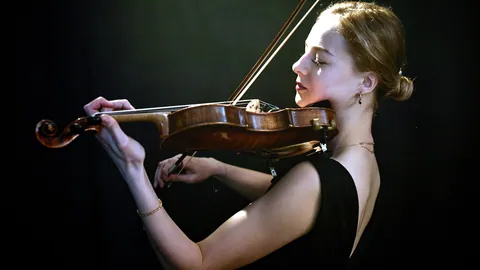 1. START HERENew Music ExpressNew Music Express is an independent monthly magazine of new music, published by New Music Press Ltd and founded in 1985.2. START HERENew Music InstrumentsNew music instruments are the instruments a 2026 composer of new music can score a piece for.
 3. DIFFERENCE BETWEENClassical and Contemporary MusicThe difference between classical and contemporary music is that classical music is the established canon of composed works from the past.
A concept or history of new music
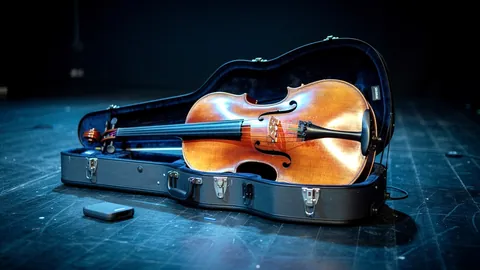 WHY IS MODERN CLASSICALThe Case Against Modern Classical MusicModern classical music is called bad, most often, for 3 reasons that have little to do with the music and a lot to do with how it is heard.